Showing posts with label staging. Show all posts

Wednesday, May 23, 2012

What? No Cookies?

I have been working with some buyers for several months... We have looked, and looked, and looked at homes.... Foreclosures, Short Sales, Vacant Homes, Model Homes, you name it. From the time we first entered a model home, the client commented "What, no cookies?" It's true... gone are the days where you can count on getting fresh baked Otis Spunkmeyer cookies at any model home.

This became the joke... Every house we went in, someone would comment "It's nice, but there are no cookies." Or something like that. Earlier this week, I showed them 2 homes that they really really liked, especially the second one. Of course, I continued the joke... "Yeah, but there are no cookies, so we better keep looking."

We went back the next evening to show another family member... Guess what we found? Yep. There were more, but we ate them. I had to take a photo before they were gone. They were tasty, too.
And no, it was not an open house. But it was an owner that did absolutely EVERYTHING right as far as staging and making the home available for viewing. She gets an A +++ !

Anyway, it got me thinking... I wonder if there is a camera in here? You know, many people have them. I even noticed them in another home I showed the same night. So, let this be a warning Mr & Mrs Prospective Buyer - be careful what you say and do, you might be caught on camera. For us, I have no idea if there was a camera or not, and we didn't say or do anything that would be a problem, so I am not too concerned. But it's pretty ironic that the cookies were there the next night, don't you think?
Oh - and in case you're wondering... We're waiting on a response to our offer. Did the cookies seal the deal? Hard to say, but it certainly sweetened things a bit.

Wednesday, March 23, 2011

Is Your Home Ready For The Market?

I have completed a series of blog posts to help you, Mr and Mrs Seller, get your home ready for the market.  Check out the posts referenced below.  Or, better yet, give me a call and let's meet. 

Part of the service I offer when I list your home is a personal consultation on all of these things!  As you read these posts, I hope you'll see how much analytical study has gone into these words of wisdom.


Painting For the Market - Color & finish choices

Show Me The Space, I'll Show You The Money! Creating visual space

Knick Knack You're Getting Whacked! - Removing the small obstacles

Vignettes that Sell - Highlighting features, selling benefits

Create the "Not So Lived In" Look - Selling the magic house

PRIORITIES, PRIORITIES - Which staging suggestions are most important?

It's Show Time!  (Final touches before a showing)
\

* * *
If you're really interested in how buyers react to different homes,

* * *

Selling Your Home? 
Hire a real estate sales consultant who understands
 the marketing and selling process! 

Vicky Chrisner

Sunday, March 20, 2011

It's Show Time!

This is the final post in our series about getting your home ready for the market.  We've discussed curb appeal, when you might need to repaint (and how), how to create visual space, how to create focal points, and creating the not-so-lived-in look.  Now....

It's Show Time!

The first few days your home is on the market are typically when you get the most traffic through your home, so making sure your home is 100% ready is really important.  Buyers are not going to come back because your agent calls their agent and says "Sorry about that first showing... the owners have staged it now... I think your buyers will like it".  So, on day one and every day after that....
Homes must look good, feel good, smell good, and sound good.

Look Good
We've focused on a lot making sure the home looks good.  Before leaving your home, take 15 minutes to make sure the stage is set and everything is in its place.  This may include final touches like opening blinds, turning on lights, taking the trash out, turning the gas fireplace on, etc.

Feel Good
Make sure the temperature of the home is right - not too hot, not too cool.  The man on the right~he is not going to buy your house.  Also make sure (especially the surfaces most likey to be touched) are clean. Remember, woman are kinestetic evaluators - they will touch things....stick is a problem for them. 

Also in this category is neighbors... make sure you've appealed to your neighbors to assist you.  Nothing turns a buyer off faster than a neighbor that fusses at the buyer for parking in the wrong space.  No matter what is "right", no one can overcome an unfriendly neighbor.  This does not mean that neighbors should "interview" prospective buyers either... it's best that interactions with neighbors, even the well meaning ones, are brief and pleasant - a wave or hello - and nothing more. Hopefully, your neighbors will leave the selling to the sales people.

Smell Good
The biggest thing here is to make sure that your home doesn't have any bad smells... trash, garbage disposals, bathrooms, laundry areas, kitty litter boxes or pet areas are sources for bad smells; and some foods (fish, ethnic foods) create unpleasant odors.  Avoid and eliminate these kinds of smells.  Usually I do not like air fresheners in a home - some people are sensitive to these kinds of smells, and buyers could think you're trying to cover something up, so if you use these don't over do it.   No matter what the smell is - the man on the left... he is definately NOT buying your house.


During an open house, or perhaps on a Saturday morning before several expected showings, you might choose to bake a pie or cookies, or pop popcorn to give the home a "homey" smell.   Real candles create a fire hazard and I do not encourage them, even during open houses.  There are electric candles that can provide a nice visual affect and sometimes also offer a light scent....but again, don't over do it. 

Sound Good
Again, here the important thing is to avoid and eliminate negative sounds that can impact your buyers perception of the home.  Talk to your neighbors and let them know you're expecting a showing, especially when you're having an open house - hopefully it is not when they are having band practice next door, or cutting down the tree in their front yard; maybe they can even keep their dogs inside their home so they aren't barking at your potential buyers while they walk around the back yard.  Don't leave alarm clocks on, try to avoid setting home alarms that may be accidentally triggered, and turn off the children's cartoons, the teenager's stereo or Uncle Ed's opera music.
Sometimes we'll suggest you leave music on in your home when you're expecting showings perhaps some light jazz or a holiday instrumental which "loops" (you don't want empty static playing when buyers are there).

Price and promotion are what get people to walk in your door.  Staging is what closes the sale.  Don't skip it. 

Ready to talk to me about listing your home? I will bring all of this knowledge, and much more, to the table and will help you acheive your goal - getting the most money for your home in the shortest amount of time.

Vicky Chrisner, Real Estate Sales Consultant
703.669.3142

* * *
Interesting Notes:  Sight and sound are the strongest senses for adults.  Women are more kinestetic (meaning they touch things to see if they like them).  Smell is stronger for men and children.  Men prefer vanilla, apple or cinnamon smells,  women tend to like fruity or flowery types of smell (i.e. berry, lemon, lavender).  The most widely appreciated smell is vanilla.  Understanding this is all part of understanding the psychology of selling, so that you can stage appropriately for all senses.  Details matter.

PRIORITIES, PRIORITIES

For the last couple of weeks, I have been creating posts which, if you try to do all of it, can completely overwhelm a seller.  So, here is the reality... no, I do not expect anyone to do everything in these posts.  There are limits.  And, there are priorities. 

If you know who your most likely buyer is, and you understand general buyer psychology, then you can easily prioritize so you're making sacrifices where they are most important.

In general, here is the sales process for most buyers:
  • Buyers shop first online via a search engine (with or without their agent).  They put in search criteria:  Geography; Price and Minimum requirements - (i.e. 4 bedrooms, garage).  You can not change the geography of your home.  It's not too practical to change the basics of your home (like the number of bedrooms).  So, what you can control here is price.  Determine your listing price carefully so that you will be considered by buyers - with the wrong price (too high or too low) your home will not even be on the radar of the right buyer. 
  • Buyers (or their agents) see your ad.  They look at the picture and price FIRST.  Then they look at the details and additional pictures.  Always have additional pictures in your listing, a good description and lots of details.  Photo staging is critical here so you get good pictures.  Sometimes it is necessary for more than one photo shoot. 
  • Buyers schedule a tour - make it easy for them to show your home!
  • Buyers look at your home.....
When buyers come inside your home, here are some principles to keep in mind when choosing which areas are most important to stage properly:

  • View from the front door - the first impression usually lasts, so it needs to be impeccable.
  • While in a typical "married couple/family" scenario, the men usually determine the price range, the women usually choose the house.  So, if you must choose between areas to stage, focus on the areas that appeal to women first (if your home is likely to be sold to this type of buyer).
  • Women focus on kitchens, baths and master bedrooms - and women seek fantasy (relaxation, quiet, romance).  Candles by a bathtub rarely will appeal to a man.  Dirty dishes in a sink or a full trash can can kill a sale for a woman.
  • Areas of importance to men are basements, garages, storage spaces (incl. sheds), outdoor spaces, gyms - and men focus on functionality (organization, space for tools, toys and building, and grilling).  A workbench in these areas sells.  A TV or "party fridge" in the basement or, better yet, a garage, will make a strong impact.  Women will barely notice these things.
  • Children must see some spaces for playing - a few visible toys go a long way with children...even in a home without children, a guest room with a playful motif and a couple of stuffed animals of popular characters will make a friendly impact.  It's important that even childrens rooms are not "too" busy with toys or even an over abundance of colors - Adults find this overwhelming and will translate this as chaotic - not a thought that sells. This is even overwhelming for children who will (especially young children) immediately pick up toys that aren't theirs and get into trouble.  :(
  • If your home is likely to be sold to a "typical" suburbian family with children, and your home has 3 or 4 bedrooms, there are a few areas of importance:  Make sure bedrooms show as bedrooms - not libraries or dens.  Also, make sure there is a table in the kitchen if at all possible (even if it is a small bistro set).  Parents like to feed small children in the kitchen.
  • If your home is likely to be sold to someone who might have extended family living with them, or perhaps have a live in nanny, then staging additional sleeping areas separate from the main living areas will have a strong positive impact.  Even if it isn't a true bedroom, basements often have rooms which can easily transform to sleeping areas.  Kitchenettes and wet bars are also attractive spaces in basements which appeal to this type of buyer.

Of course, we're talking in generalities here but we always like to stage with the target buyer in mind.   When you contact me to help you sell  your home, part of my initial investigation is attempting to determine who your most likely buyer will be, so when talk about staging we can strategize together, balancing your need to get the highest amount possible for your home, quickly, with your ability to continue to live in your home.

This series is nearly complete... but there are a few more details to discuss.  Next Up:  "It's SHOWTIME!"

* * *
A special thanks to my friend Dawn who is allowing me to use her "foot in bubbles" picture in this blog. 
ONLY A WOMAN would take a picture like this, am I right?  That's my point. 
This is what sells, for women.

Saturday, March 19, 2011

Create the NOT-So-Lived-In Look

So far, we've learned how to create visual space, to depersonalize and to highlight features and sell benefits with staging, but I have not mentioned the single most important thing you can do to increase the chances of your home selling. 

The home must be clean.  Dirt does not sell.  You knew that, of course.  Well, I hope so. (I am surprised sometimes.)

Not only does the home have to be clean, but it must appear "beyond" organized....It needs to look "lived in" as if life has no negatives. 

The typical "lived in" look does not sell. 
Ok, it will sell... but it will sell for LESS.

You know that line from the movie when the girl has been shopping for a week and trying on a million outfits and her date finally arrives and says she looks great and she replies: "Oh, (blushing) This old thing?"   It's the same concept as the model on TV that washes her face and still has make up on.  Yeah, right!  And yet, we buy the product.

That's what we're going for here.

When we sell homes we sell fantasy... and in a fantasy, the children never have homework to do, or bookbags thrown on the couch, the jacket is never draped on the kitchen chair, the laundry never stacked in a basket waiting to be put away, bills never come in the mail, the trash never needs to be taken out, there are never cartoons on and toys are never on the floor.  

Sure, all those things happen in life... but not in YOUR house.  NEVER in your house.  In YOUR house, life is perfect.  There are only features and benefits and solutions....no problems, tasks, work, challenges, chores or obstacles.  Nope. All that stuff might happen in the last house the buyer looked at, but not here.  Which house are do you think they are going to buy?

So unfortunately, before every showing, it is critical that you run around the home and be sure it looks like a commercial marketing space and not like your home where your family lives and has bills, and work, and school and homework and sick people and broken legs and cars that have flat tires and a big honkin headache. Nope.  NOT HERE.  

At YOUR house:
  • Books and magazines are purposefully displayed properly and neatly, and have all the right titles.
  • You don't get bills... so there's no mail on the counter top.
  • Everything in your home works magically without the need to be plugged in... or at least that is what one would think because the surely don't see any chords, wires or plugs. 
  • Kitchen appliances like toasters, blenders, etc. should be tucked away. The food here also magically appears when you're hungry.  In fact, there's probably a bowl of fresh fruit right there on the counter top.  Always fresh.  Not plastic. 
  • Window blinds, when in place, are open evenly, to bring in natural light or otherwise create the desired effect.
  • Nothing happens at your house that is accidental or by chance - everything is always perfect.  From the outside, if you see open windows, every single window is opened to the same level.  Always.
  • Your home is so perfect that you don't even need a trash can... at least not one that people can see, and definately not one people can smell.
  • Oh... and your closets?  They aren't cluttered or packed.  Your closets are SO BIG that you have an entire wardrobe in there and still have extra space.  How do we know it's your whole wardrobe?  Well, golly, you've got something from every color of the rainbow... in fact, it's actually in order by color.  Wow.  This is a house I want to live in.  What about you?
I think you sort of get the picture.  I know it is a hard standard but I am telling you it sells. Please understand, buyers have no idea that they are as critical as they are....nor do they realize psychologically how gullible they are to these tricks of the trade.  I have shown many homes to people that they think DO look past all of these things, but they don't.

I know trying to live like you're not living in a home is, well, darn near impossible.  The good news is that if you have priced well and you actually do most of the things suggested here, your home will not be on the market for very long.


* * * * *


Friday, March 18, 2011

Vignettes that SELL!

My goal with this post is to help you understand how to create a pleasing focal point, and why it's important.

Remember earlier in this series when I told you to walk through your home like a buyer? Do it again now. When you talk into a room, where do your eyes go? Is that REALLY where you want the buyers eyes to go?

A home is nothing more than shelter, right?  If a home's only purpose is to protect you from the elements then why are they so expensive? Our homes have evolved to be much more than shelter.  They are filled with various features, each one of which has its own benefits....and THAT is where the money is. 

Our goal with staging is to sell those features and benefits.  Here's an example:

Feature: Window/View
Benefit: Sit by the window and read or bird watch.
How to sell that story: The window is clean, has no screens, may (or may not) be framed by sheers on the side. Beside the window sits a comfy chair (turned to welcome the buyer to the room). Beside the chair, sort of behind it but still visible, is a floor lamp and off to the same side is a small footstool with a book, as if someone was reading it and has just walked away - the book is open and upside down. Ah! Maybe it is a book on identifying birds.
When you look at that picture (Chair, lamp, footstool), it's sort of a triangle, and sits beside the feature you're highlighting. Ta-da! You’ve created a “vignette”( a staged focal point).  There is NO WAY someone is going to walk in that room and not notice that window and that view.  No Way!

Every room should have a strategically placed focal point.
  • It could be (as in the example above) to highlight a feature and sell a benefit. These would be focal points near fireplaces, windows, etc.
  • Or, you do the exact opposite, using a focal point to divert attention. For example…a radiator may keep you warm at night, but they aren’t really “pretty”… so you might want to have a staged focal point opposite the radiator so as to detract attention.
  • You could just be “naming the space” (Often we see areas of a home that people say “what is this room”? Staging eliminates that question.)
  • By default what you’re highlighting is the space. In that case, the focal point should be the point furthest from where the buyer will enter the room.
  • You can even stage outside~ Is there a fabulous tree outside where you can create a focal point, perhaps a bird bath and feeder? (Be careful attracting wildlife, though - it's not everyone's cup of tea and no one likes bird poop too close to the house.)
Once you know where your focal point should be in each room, and you know how you're going to create it, then stage the rest of the room around it. Accessories should be in odd numbers - 1, 3, or 5 - and should be varying shapes and sizes but a similar color palette with the exception of your focal point which may be brighter. When you step back and blur your eyes, each "display" will look sort of like a triangle, just like the above picture.

Once stage 3 is complete, you're probably starting to see pieces of this madness come together. The end is in sight!

Our next post is: Creating the Not So Lived In Look!  Don't miss it.

Thursday, March 17, 2011

Knick Knack, You're Getting Wacked!

Continuing our series on preparing your home for the market, (check our the previous post "Show Me the Space, I'll Show You The Money"), we're going to tackle the little things....

Step #2: Kick Knack: You're Getting Wacked!

I touched on this in the prior post but it bears talking about again, and more in depth.  Some people will delicately refer to this stage as "decluttering" and "depersonalizing".  I have seen how some sellers interpret this, so I am taking the delicate out of what I am saying: 

If you love it, if it's very presence is what makes this house feel like home to you,
then it probably needs to be hidden.  
The pictures of the kids, your parents, your college diploma, the letter from the President, pictures and momentos from your world travels... they are all awesome.  But they really need to be put away.  They are telling YOUR story.... they tell us about your life.  Your life is not for sale.  Your house is.  We need to display your house,  not your stuff.

On that note, got collectibles? Knick Knacks?  Check the general "THREE" rules:
  • Anything smaller than 3 inches tall needs to be hidden.  
  • If there are more than 3 of anything in a room then there are too many.

Keep in mind, your idea of "happily ever after" may not be the same as your buyers'.  They are looking for a place where their dreams can unfold....not on picking up where you have left off on your journey. 
Emotionally, these are the hardest things for sellers to do.  But I promise, it makes a difference.  You will get a quicker contract if you're willing to sell your house without your story.
* * *
Our next post is coming soon: Vignettes that Sell!  Stay Tuned.

Wednesday, March 16, 2011

Show Me The Space, I'll Show You The Money!

When we live in our homes, we surround ourselves with things that make us happy - pictures of loved ones, favorite places, gifts.  We put things where they make sense and are readily available for everyday use.  We make our homes comfortable and convenient.  But when it's time to put your home on the market, you have to make a decision.  Do you want top dollar for your home?  Then you must be willing to give up some comfort and convenience in exchange so that your home shows its best at all times.  Here are some tips to make that happen.
Step #1: Show Me The Space, I'll Show You The Money!

Much like a model will have portfolio shots in a bathing suit, we need to strip your home down to the bare essentials. (Play striptease music now.)

"Let There Be Light"

You have blinds and drapes up to keep people from looking in... but when your home is on the market is exactly when you want people to not only look in but come in.  So, we need to thin out window treatments.  Remove screens, wash windows, remove heavy drapes. Open blinds or remove them. Consider leaving sheers or valances, just to add a splash of color or accent, but make sure you can see out and the light can get in.  This creates a bright happy space and it always makes rooms look larger.
Next, let's talk floors.

Usually an area rug's purpose is to protect the floor underneath.  When it's time to put your home on the market its time to show off those floors that you have so valiantly protected over the years.  So in most cases runners and area rugs should be pulled to expose the floors beneath.  Rugs take up visual space.... so the only time I use them in staging is when the room is otherwise cavernous or has no color. 

Important Never-Never Notes: (1) Never leave carpet in a bathroom. (2) Never leave an area rug on a carpeted area.   These always get negative comments from buyers.

Musical Chairs! 

Walk through the home as if you are a buyer.  Enter through the front door, and bring your entire family and a REALTOR with you...everyone walking side by side. This is how a buyer looks at your home. See how crowded everything is when 4 people try to walk through a home together? 

In an unstaged home, sometimes showing is remineiscent of a game of musical chairs where, as you walk through the home, it seems you are always standing directly in front of a chair you can sit in when the music stops. Not good. 

Move or remove all the furniture you touch. If it's crowding doorways, it's got to go. If you can't walk through walkways, say "bye bye" to the pieces that get in the way. Got furniture blocking windows or doors? Not good. Most rooms can, as a general rule, lose at least one piece of furniture, sometimes several.

Take the leaves from every table you can. If you have those larger dining room chairs with arms, hide them, quickly, even if you must borrow ugly chairs from your daughters house.

What's In A Room?

Buyers must be able to tell what the intended purpose of a room is by the first piece of furniture they see. Bed=bedroom; couch=living room; dining table=dining room; desk=office.

Avoid having beds in the den or desks in the bedroom. Unless you have dedicated "gym" space, originally intended to be gym space, then the treadmill has to be packed away. A treadmill in an office says "there's no space for a home gym in this house". A bedroom used as an office screams "this house has no office, and now no guest room".

Welcome the buyers to every room. (Huh?)

You won't be home when the buyers come (no, you shouldn't be home), so make sure every room is welcoming your buyers... the furniture should be turned to face them as they enter. The buyers shouldn't walk into a room to see the back of a couch, TV or other furniture... it should always be the front. Even pillows on a couch should be turned to "face" them - not the center of the room, but the doorway, as if they are saying "hi".
"As far as the eye can see" For a seller, there is much wisdom in thinking about this phrase.

Look at specifically what is eye level in your home. Buyers are measuring space with their visual perception, so what is that? Can you remove a hutch, a bookshelf, a canopy, a headboard? Consider putting away tall back chairs and keeping the stools, for example.

Generally, there should be no pictures of any kind in a hallway or stairway; and most walls are meant for only one picture....and only in the rarest occaisions should more than 3 pictures be on one wall. Pictures should be used sparingly and not be family pictures.

Get rid of doilies, table cloths, and the seat cushions on chairs (you know, the kind you tie in place). No lace, no frills. This includes the comfy blanket or hand made afgan from Aunt Betsy that is displayed on the back of the sofa.  Unless that blanket serves a strategic purpose, then it probably needs to be tucked away.

Trust me here, no one is looking at your beaten up old table or the cheap chairs. They are, however, looking to purchase the floors and space behind and beneath these things, so let them see the space. All this extra stuff is simply a distraction and they will think about your stuff, and not about your house.

Stay tuned, because this is only the beginning of this series.

Next up - "Knick Knack: You're Getting Wacked"

Staging to Sell.... The Series Begins

You're putting your home on the market, you want the most money possible for your home in the least amount of time. I can help you get that. I've got a plan! But, I am going to need your help.

It goes without saying that if your home is obviously in disrepair then be prepared to sell it at a discount. Otherwise, make the repairs. Then, be willing to "earn" the extra dollars you wish to get from your home...

And with that little tidbit, I begin a series of posts about preparing your home for the market. Ready? Read on!


Also see prior posts:

Wednesday, March 9, 2011

Do We Need To Repaint?

“I will be putting my house on the market soon and I’m wondering~
Do we need to repaint the whole house?”
Common question; but the answers vary.

=============

Clearly, if your home is overdue for a paint job, then yes, to get the highest amount possible for your home, you should repaint. Otherwise, I hate to give a blanket response to that.
 
Many people have highly personalized décor and coordinating wall coverings; but it may not be necessary to undo all that work when you sell.  Having said that, here are some simple guidelines and tips:

A VACANT HOME: If the home is going to be vacant when it is shown and marketed, then it becomes more important to have a fresh paint job, with color selections from a neutral palette so as to appeal to the widest groups of people. [Click here to see repainting guidelines]

WALLPAPER: Because there is a general perception that wallpaper is hard to repair, touch up or remove, it's generally advised that wallpaper be removed, or perhaps painted over before putting the home on the market.  This is particularly important if it is in poor repair, dated, highly personalized or a busy pattern.

PANELING:  The “circa 1970-something” paneling is outdated and an obstacle to selling today.  But did you know you can paint over it? It is far more practical than removing it and hanging drywall, and so that is a common recommendation.
BUYER PROFILING:  Who is the most likely buyer for your home?  What is their age, origin, family composition, gender?  Where do they work and play?  Based on that information, we make staging choices which may require some repainting.  Here is an example:  Women buy for entry ways, kitchens, bathrooms and master bedrooms. Men buy for basements, garages, and storage areas. We try to make sure those areas are appealing to those gender groups. So, for example, a basement family room that looks too feminine (pink paint or flowery wallpaper) may need to be repainted.

The buyer profiling part of these guidelines gets tricky and requires an analytical market study.  This is all part of the services I offer when you hire me to represent you to sell your home.  So, for a personalized opinion, give me a call and let's set up an appointment!

Vicky Chrisner
Keller Williams Realty
Leesburg, VA
703.669.3142

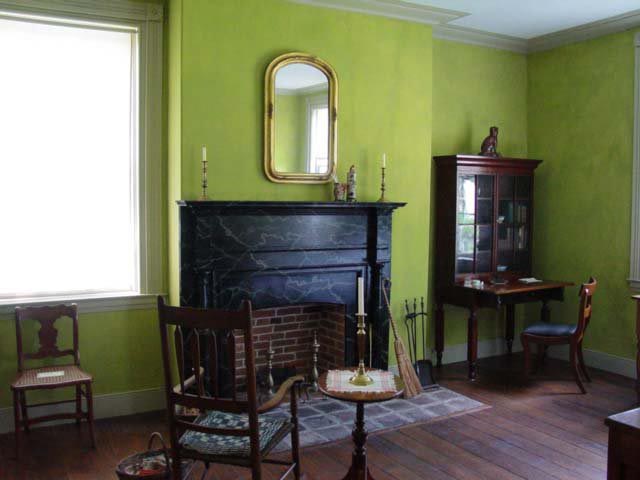
(Notes about pics on right:  While the top picture with green walls will not appeal to most people, it isn't likely to interfere with a sale in most submarkets.  The lower picture with the pink bubblegum family room could keep a home from selling.)

Monday, January 25, 2010

You Might Not Need A REALTOR IF.... Reason #3

Reason #3: You Might Not Need A REALTOR IF….
You Don't Need Assistance with Developing a Pricing and Staging Strategy

The number one problem I see with this is a lack of objectivity.  Most people don't really know that they need help here.  In fact, many people are in such denial that they won't even take the advice of their real estate agent when they do hire one.

EVERYBODY thinks their property is the best.... yeah, that's why you bought it.  But you know it is not THE best, otherwise, you wouldn't be selling.  During the sales process, I recommend you focus on the reasons you DON'T want to live there, and not get offended when people suggest reasons they wouldn't want to live there.  I even find myself thinking "well, yeah, I know that house sold for X but my house backs up to..." And, then I realize what I am saying. 


  • Do you know how buyers look at homes? 


  • Do you know how to make your home appeal to the most likely buyer?


  • Who is your most likely buyer?

Buyers are liars, so don't ask them.  I mean, it's not their fault, they believe what they say to you, but they don't know.... until they find what speaks to them.  Can you make your home speak to them?  And, when it speaks, is one of the things it says "value"?  If not, it won't sell.

As a professional, in addition to having objectivity, we have information....lots of it.  We've developed resources and tools and professional relationships so we can obtain information quickly, accurately and efficiently with regard to comparables and activity levels.  We may have seen some of the comps, know their condition and the less obvious reasons for why they are, or are not, selling.  If not, we can usually get the inside scoop pretty quickly.

  • I recall one comp and I swear the reason it wasn't selling was the python in the cage when you walked into the living room.  I don't think it ever sold.  
  • In another, I know the property wasn't selling largely because of the bird on the breakfast bar.  I re-listed it, staged it right, and sold it in a month.
  • In still another situation, I am aware that one comp that was tainted by a low FHA appraisal for 6 months, eliminating 80% of his target buyers.  Too bad his agent didn't know how to get that released.
First you have to know these things... then you have to know how they will affect the price for your home.

Good agents have knowledge about the market, who your buyers are, how buyers are buying and what they are considering.  And, a good agent can sell to that segment.....with property staging and pricing.

With your help, we (as agents) will recognize what is great about your property.  Then, with our help, you can show it off.  Sellers are shocked (and offended, I think), when I suggest:


  • They should hide te coffee maker and display a cook book; to put away that great family photo and the bagua.  
  • Your home is probably full of things you love.  Your lovely things are not for sale, put them away - get a storage  unit if you have to.  Oh, wait, minimalists - don't get too cocky, empty is not good either.  
  • You may have a great furniture arrangement for watching TV, your buyers will not be watching TV while looking at your home, but I can't see your fireplace from the front door, so we're moving your couch. 
  • Your curtains are beautiful - take them down.  
  • It is nice to have the windows open in the spring - but don't, and get rid of the screens.  And, oh, by the way, when is the last time these windows were washed?  
  • Functionally, I would like the trash can there, too.... but it's got to go. 
  • Sorry, Charlie... if you want the magazines in the John, they gotta be hidden.
  • I don't care if your home was professionally decorated - in fact, maybe ESPECIALLY if your home was professionally decorated, you will need staging advice.
You don't want to hear any of this....I don't want to say it.  But, it's for your own good, and you should pay people to say it to you.  If you listen, you will MAKE MONEY.  Sometimes BIG MONEY.

And, this part of the consulting goes far beyond just moving furniture.  Should you paint? Replace carpet? Replace the roof? What's going to return you the biggest bang for the buck?  Is it important to have the driveway sealed, the garden mulched?  Is it better for the home to be occupied or vacant? Should we leave furniture, or empty the house?  My answers to these questions depend on literally thousands of factors, and so they are different for every home and every household.

At the end of the day, if you are POSITIVE you don't need the staging advice (do not ask your friends here, they will either lie or not know any better when they tell you what you want to hear), or pricing advice (the worst person to ask here is someone in the neighborhood), OR you won't listen anyway, then skip it - don't bother hiring a real estate agent.....Well, unless you need their other services.


* * * * *

Stay tuned to the REAL ESTATE WHISPERER for the rest of the posts in this series. 

In the meantime, if you need honest feedback about whether you should hire a REALTOR to sell your home, and if you're in the Loudoun/Dulles area, feel free to call me.  I am happy to talk with you over the phone about some of the pros/cons of hiring a real estate agent.
* * * * *
703-669-3142

Saturday, January 16, 2010

First Impressions Pay Dividends - The Value of Home Improvements Pt 2

In the annual survey, NAR (National Association of REALTORS) attempted to provide a gauge for what return sellers might expect to recoup after doing home improvements.  In other words, if you spend $100 for the improvement, will it increase the value of your home $100, or more, or less - THAT is the question.


Wondering what the one exception is?  (Drumroll, please....) Replacement of a front door!

This reinforces another piece of advice I give to clients – first impressions count, and in this case, it seems they pay dividends. 

In fact, I tell seller clients that 30% of the buying decision is made prior to arriving at the property, as they’ve usually seen pictures, have a clue about the area and know the price before they’ve considered looking at your property – they are 30% sold. Then, they make an appointment or maybe just do a “drive by” – this accounts for another 20%. Here, they are taking into consideration more intimate geographical decisions – your neighbors, the street, the outside of the home – all together referred to as curb appeal. A front door replacement has some affect in this calculation, too…. Although they haven’t touched anything or gotten an up close look, so it is still minimal.

Here it comes, they get out of their car. They imagine coming home to this place… do they like what they see? They stand for awhile at the front, waiting on someone to open the door. How much trouble do they have getting inside? Does the lock fall off the door? Does it unlock? Does the door look good? There is a lot of time spent here, and thus, the front door replacement would have an impact.  I also urge sellers to consider other details a buyer might notice if they were standing at the front door - cob webs, windows/screens, porch furniture and condition, cleanliness of siding, any adornment on the door or near the door - like flowers, wreaths, flags.... these all impact what the buyer thinks about who lives in the home, and how they care for it.  Worn door mats will cost you money on your sale - replace it or get rid of it all together.

From the front entry, another 25% of the buying decision is made. That means, if they enter you home with a positive impression they are 75% sold. What can they see from the front entry? In staging and marketing, there is a great deal of time spent on how to make this critical impression.

Once inside they place their furniture, figure out where they will sleep, entertain, if their furniture will fit… and all this together only accounts for 25% of the buying decision, but they must be 98% sold before they will put together an offer. As a seller, understanding this process is critical. Usually the first and last 20% a seller can not affect-they can not change the location of their property, they can not change the configuration of the home. They can price right and stage right – and that is the difference between sold and for sale, and where listening to a qualified sales consultant comes into play.

 
Clicky Web Analytics